
Why African children should learn to build robots, technology and code
Olanike Tidjani, a FemCoders volunteer and co-mentor of Team Benin, explains why children should have the chance to build the tools that shape their future.
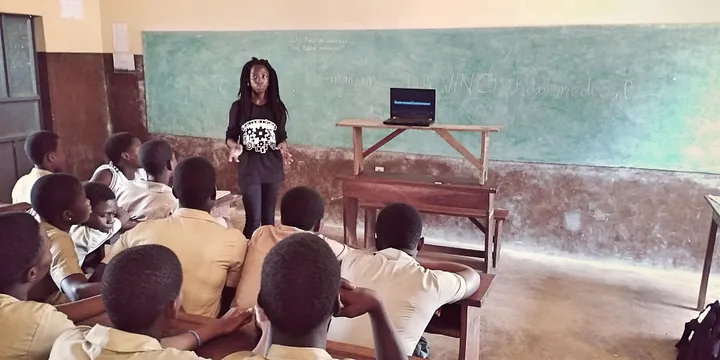
Olanike Tidjani shares what teaching robotics with FemCoders and mentoring FIRST Global Team Benin taught her about children, technology and the future of Africa.
Why should children build technology?
When I volunteered to teach robotics with FemCoders in Parakou, in northern Benin, I stood in front of a classroom and showed the students what robots could do. Then I asked them to imagine building one themselves. I remember the surprise in the room. For some children, a robot seemed like something made far away, by people they would never meet.
That feeling matters. If a child thinks building technology is for somebody else, they may never get the chance to find out what they can do. In our classes, we teach children how to put robot parts together, write code and make a machine follow their own instructions. The first time a child sees a small idea become a moving object, the room changes.
That moment stayed with me. It made me ask myself a bigger question: what happens when a child grows up seeing technology everywhere, but never sees anyone like them building it?
They may use a phone. They may watch a drone fly. They may play a video game. They may see a robot on television. But all of these things can feel like magic made by people far away.
I do not want African children to only watch the future arrive. I want them to touch it, question it, break it, fix it and build their own version of it.
What do children actually learn in a robotics class?
When many children hear the word “technology,” they think about phones, computers or the internet. These are all technology, but technology is much bigger. It is any useful tool or system created to solve a problem.
A robot is a very good teacher because it brings many ideas together in one place. It has a body. It may have wheels, arms, sensors, motors and wires. It also needs instructions. Those instructions come from code.
Imagine you build a small robot and tell it to move forward. It turns left instead. You do not receive a bad grade and go home. The robot is showing you that something needs to change. Maybe one motor is turning the wrong way. Maybe a wire is in the wrong place. Maybe the code has one small mistake.
You look. You think. You test. You try again.
This is what learning should feel like. It should be active. It should make you curious. It should give you a reason to understand maths, science and code instead of asking, “Why do I need to learn this?”
How has FemCoders helped children learn?
FemCoders started with a clear goal: help more girls and young people enter technology. Its founder, Rachael Orumor, had studied software engineering in a class of 43 students. Only three were women. She understood what it felt like to enter a room and see very few people like you.
So FemCoders created free learning activities for young people, especially girls. The idea was not simply to say, “Girls can do technology.” The idea was to give them tools and let them prove it to themselves.
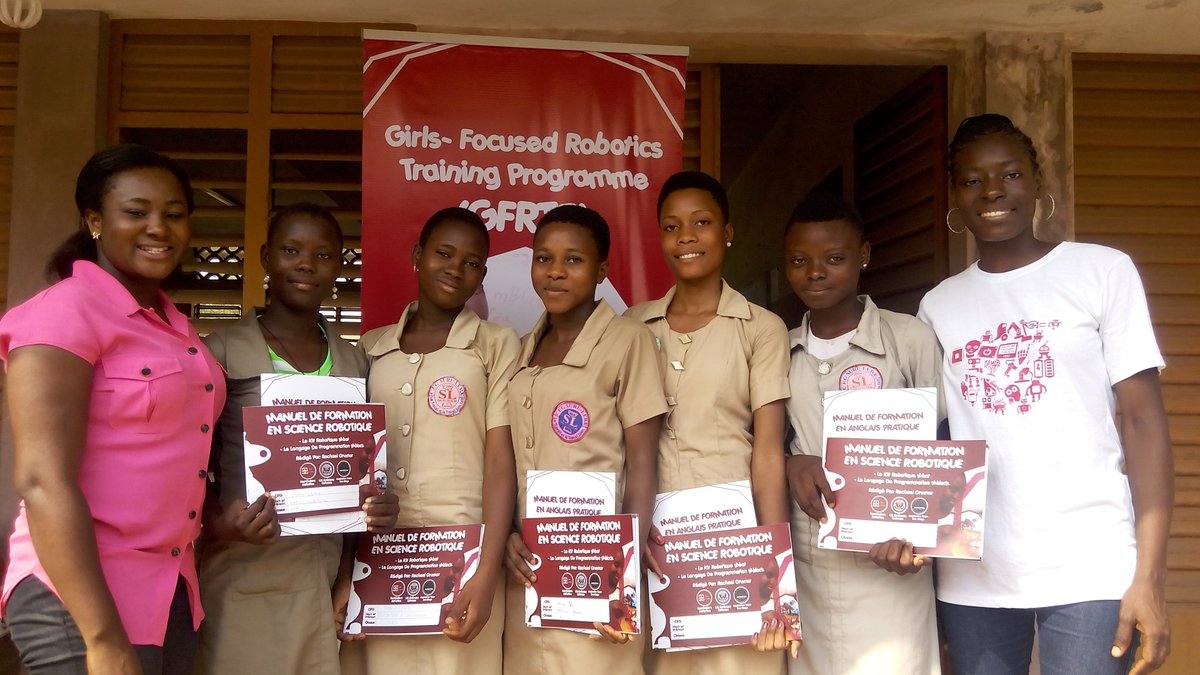
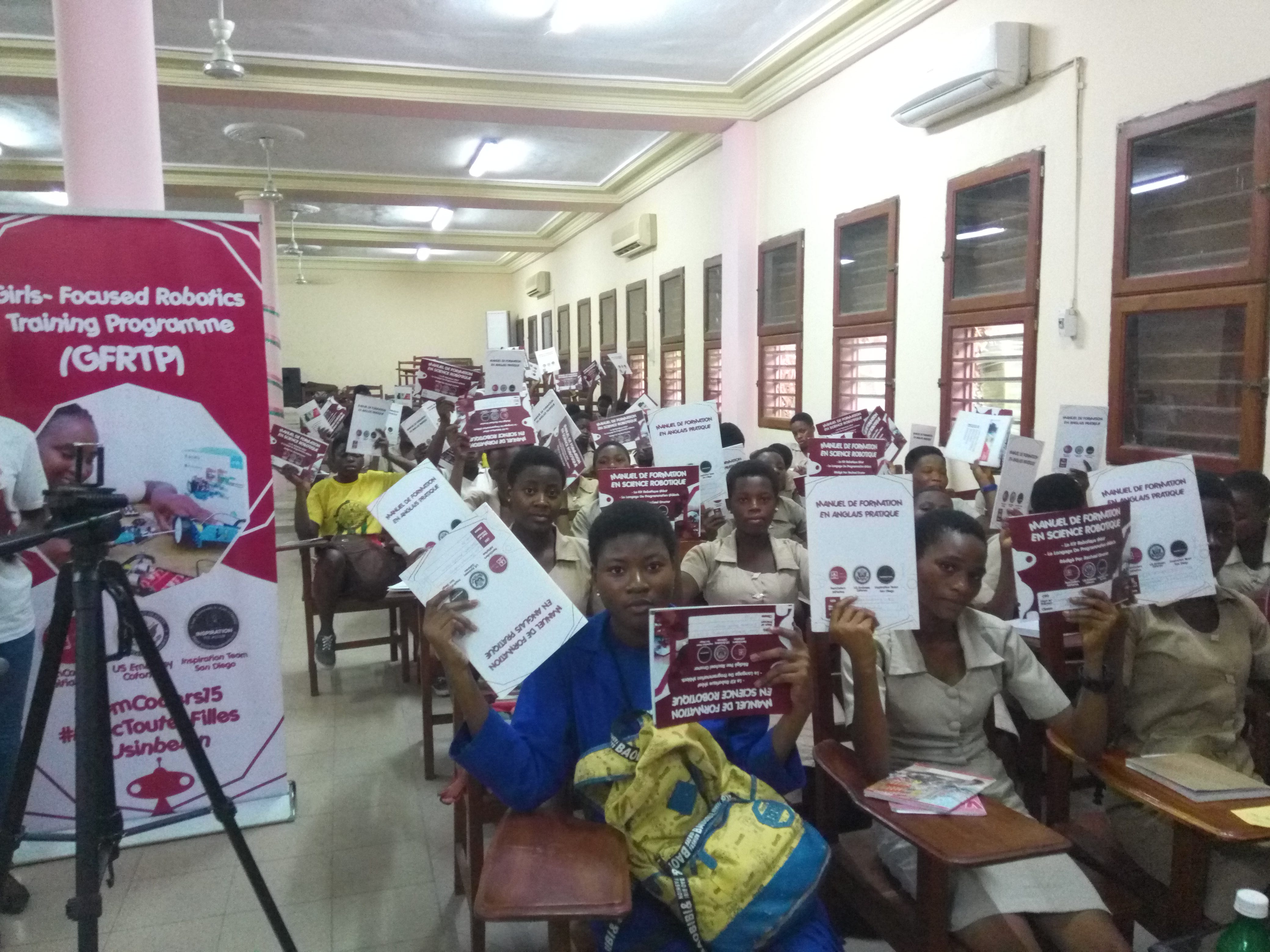
After Team Benin joined the first FIRST Global Challenge in 2017, the team returned home with more than memories. The experience helped inspire the Girls-Focused Robotics Training Programme. Students learned how to assemble an mBot, use block-based programming, practise English and work together.
One programme at Lycée Technique Coulibaly in Cotonou brought together about fifty girls and twenty boys for six weeks. They did not sit and watch an adult build everything. They learned the parts, assembled robots, programmed them and prepared their work for an exhibition.
FIRST Global reported that, among the first 380 students trained through the wider programme, 280 were girls. Some later became robotics trainers. Some even joined Team Benin.
Think about that journey. A child enters a room without knowing how a robot works. Later, she is the person showing another child what to do. This is how change grows. One learner becomes one teacher. One teacher reaches many more learners.
How does building a robot teach children to act?
Children often hear adults talk about Africa’s problems. We talk about education, health, farming, energy, safety, transport and the environment. Sometimes we talk so much about problems that children begin to believe problems are simply part of Africa and nothing can be done.
Robotics teaches a different lesson.
It says: look at the problem. Understand it. Break it into smaller parts. Build something. Test it. Learn from what does not work. Improve it.
This way of thinking is more important than one robot. A child may not become a robotics engineer. That is fine. They may become a doctor, farmer, artist, teacher, designer, business owner or mechanic. But they will still know how to face a difficult task without freezing.
They will know that a first idea does not have to be perfect. They will know that mistakes can give information. They will know that asking for help is not weakness. They will know that big results often come from many small changes.
This is the mindset we need.
Technology moves fast. How can children keep up?
Technology moves fast. A new tool can appear before we have finished learning the last one. Artificial intelligence, robots, smart machines and new apps are changing how people study and work.
Children need to understand speed. In a robotics competition, time matters. You may have only a few weeks to design. During a match, you may have only a few minutes to act. Your robot must move quickly, but speed alone does not win.
A fast robot going in the wrong direction is still going in the wrong direction.
The same is true for technology. We should not use every tool simply because it is new. We should ask: What problem does this solve? Who does it help? Can it hurt someone? Is it fair? Is it safe? Does it fit our community?
A child who learns robotics should also learn responsibility. Building something powerful means thinking about how it will be used. The future does not only need people who can code fast. It needs people who can think clearly and care about others.
What can children learn from Team Benin?
Since 2017, Team Benin has represented the country at the FIRST Global Challenge. This competition brings teams from many nations together to build robots around important world problems.
The team is not made of children who were born knowing how to build everything. They learn. They test. They argue about ideas. They make mistakes. They repair parts. They work under pressure. They explain their choices. And they keep moving.
In 2017, Team Benin placed seventh among 163 teams and was the only African team in the top ten. That result was important. But the biggest lesson was not only the ranking. It was the proof that young people from Benin could enter a world competition and perform at a high level.
Every new Team Benin carries that proof forward.
For the 2026 FIRST Global Challenge in Incheon, South Korea, another group of young people is preparing to represent the country. They are learning mechanical design, electronics, programming, safety, communication and teamwork. Behind the robot are many hours of work that most people will never see.
When children watch Team Benin, I hope they do not only say, “That robot is cool.” I hope they also say, “Someone from my country built that. Maybe I can learn too.”
Does a child have to be good at everything?
People sometimes imagine one genius working alone in a secret laboratory. Real projects usually look different. One person may be good at design. Another understands code. Another can build quickly. Someone keeps notes. Someone checks safety. Someone explains the project to the public.
A robot needs all of them.
This is good news for children who think, “I am not the smartest person in my class.” You do not have to know everything. Nobody does. You need to discover what you can contribute, then respect what others bring.
In robotics, the quiet student may notice the loose wire. The student who loves drawing may design a better part. The child who talks a lot may become a strong presenter. The one who asks endless questions may find the mistake everyone else missed.
Teamwork is not about making everyone the same. It is about making different strengths work together.
Why do girls need a place in robotics?
There is no good reason for a girl to believe that technology is not for her. Machines do not ask whether the person writing the code is a boy or a girl. A motor follows the correct instruction. A sensor gives data. An idea works because it was tested well.
But children notice who is invited, who is encouraged and who receives tools. If girls mostly see boys building robots, they may quietly decide that their place is somewhere else.
This is why the work of FemCoders matters. It does not wait for girls to appear by chance. It goes to schools, creates programmes, gives them space to practise and shows them women who are already working in technology.
We should not teach girls only to use technology made by others. We should teach them to question it and create it.
Can a school begin without a big laboratory?
It is true that robotics equipment can cost money. Many schools do not have a full lab. Some do not have stable electricity or enough computers. These are real problems, and we should not pretend they do not exist.
But the first step can still be small.
Start a science and invention club with simple weekly challenges.
Let children take apart safe, broken devices and identify the pieces.
Use one robot kit with a group instead of waiting to buy one for every child.
Invite a local engineer, programmer, mechanic or former robotics student to speak.
Use cardboard, bottle caps and small motors to make early prototypes.
Ask children to find one problem at school and draw a machine that could help.
Robotics begins before the robot. It begins when a child looks at a problem and believes it can be solved.
What can adults do today?
Parents can protect curiosity.
When a child asks how something works, do not always rush to give the answer. Ask what they think. Let them try. Let them make a safe mess. Curiosity becomes skill when it has room to grow.
Schools can make learning practical.
A science lesson should sometimes leave the notebook. Give students projects with real objects, real limits and real teamwork. Even a simple build can make a lesson stay in their memory.
Companies can share more than money.
They can donate old equipment, open their doors for visits, sponsor a club or allow staff members to mentor students. A few hours from one professional can change what a child believes is possible.
Governments and partners can think long-term.
One event is exciting, but regular learning creates results. Support teacher training, equipment care, local competitions and programmes that reach children outside major cities.
Young people can begin before they feel ready.
You do not need to know everything to start. Learn one idea. Build one small thing. Ask one person for help. Then teach someone else what you learned.
What future do I hope children will build?
I once felt hurt by the way African children were shown online. Too many images only showed poverty, hunger and need. Those realities exist, but they are not the full story.
I want the world to also see African children holding tools, building machines, asking strong questions and presenting their ideas with confidence.
More importantly, I want African children to see themselves that way.
I want a twelve-year-old girl in Cotonou, Parakou, Nairobi, Kigali, Lagos or Dakar to know that technology is not a distant world. It is something she can enter. I want a boy who thinks Africans cannot build advanced machines to meet people who prove him wrong. I want children to stop asking whether they are allowed to imagine big things.
Every child does not have to become an engineer. But every child should have the chance to discover what happens when an idea in their mind becomes something they can see, touch and improve.
That is why I believe every African child should have the chance to build a robot, and then go further: build technology, write code and shape tools for their own communities.
Not because robots will solve every problem.
Because a child who learns to build one may stop believing that difficult problems belong to somebody else.
And that child may build something Africa needs.