
The people making African cities easier to live in
A better city is built in ordinary moments: when waste is collected, a bus arrives on time, a drain stays clear or a neighbour helps put a community on the map. Meet the people behind those moments.
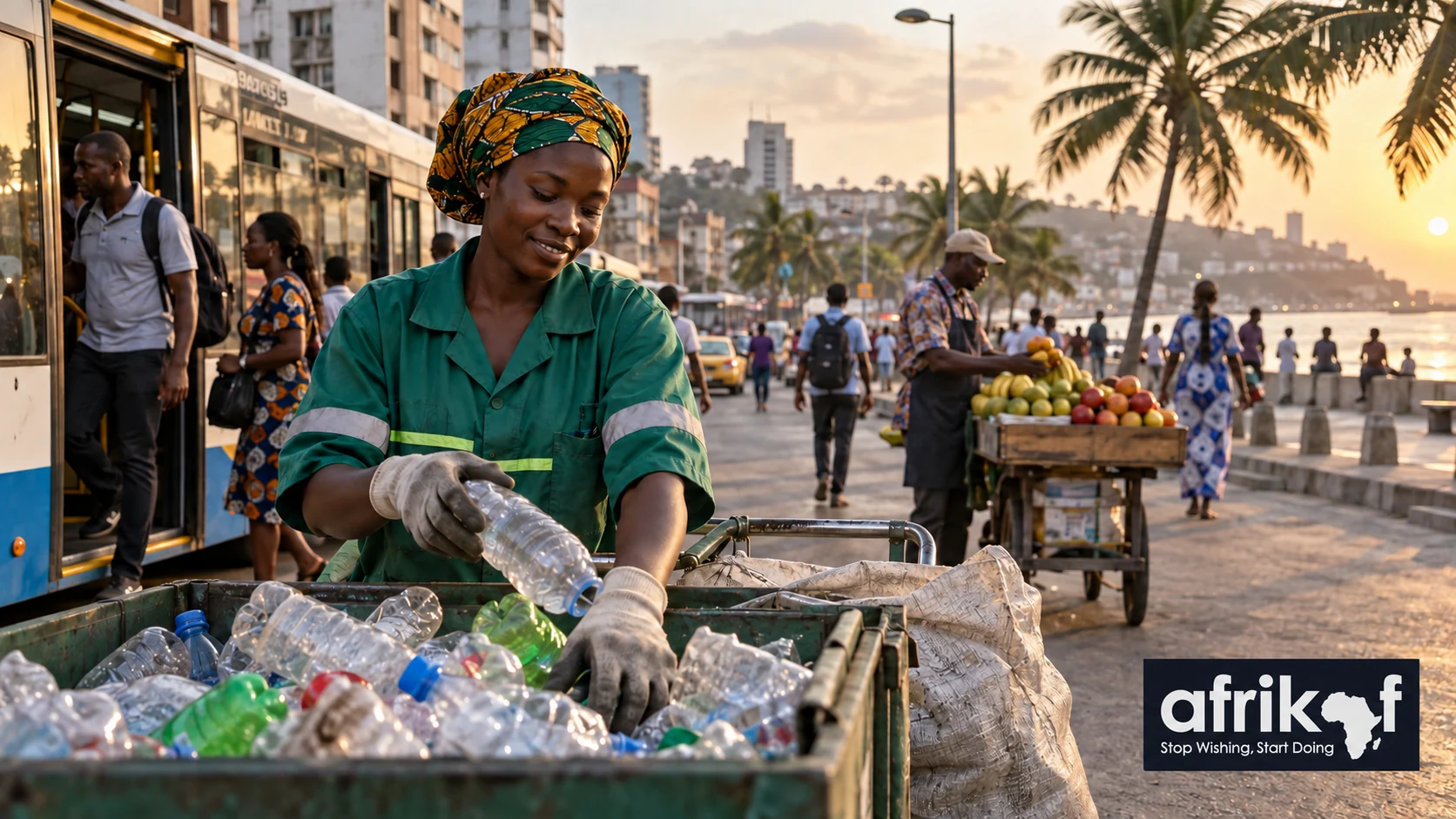
Think about a journey across your city. Maybe the pavement ends without warning. Maybe a bus takes so long that you leave home an hour early. Maybe a blocked drain turns a short rain into a difficult walk. On another street, someone has organised a collection round, painted a crossing, or asked residents what they need before a plan is drawn. The difference can feel small until you live with it every day.
Those changes rarely happen because one person has a clever idea alone. They take collectors, drivers, planners, street vendors, neighbours, engineers and local officials working together. They also take a city willing to listen to people who know its streets firsthand.
According to UN-Habitat’s 2026 State of African Cities report, Africa’s urban population could reach 1.4 billion by 2050. That number is a projection, not a headcount today. It tells us how much pressure—and possibility—lies ahead. A growing city needs more than new buildings. It needs services that make daily life work.
Here are four ways people across the continent are making that happen, and what their work can teach the rest of us.
1. In Lagos, recycling starts at the doorstep
It is easy to say that a city should recycle more. The harder question is practical: how does a household separate its waste, and who will come to take it away? For a family with a full day of work, a distant recycling centre may be no answer at all.
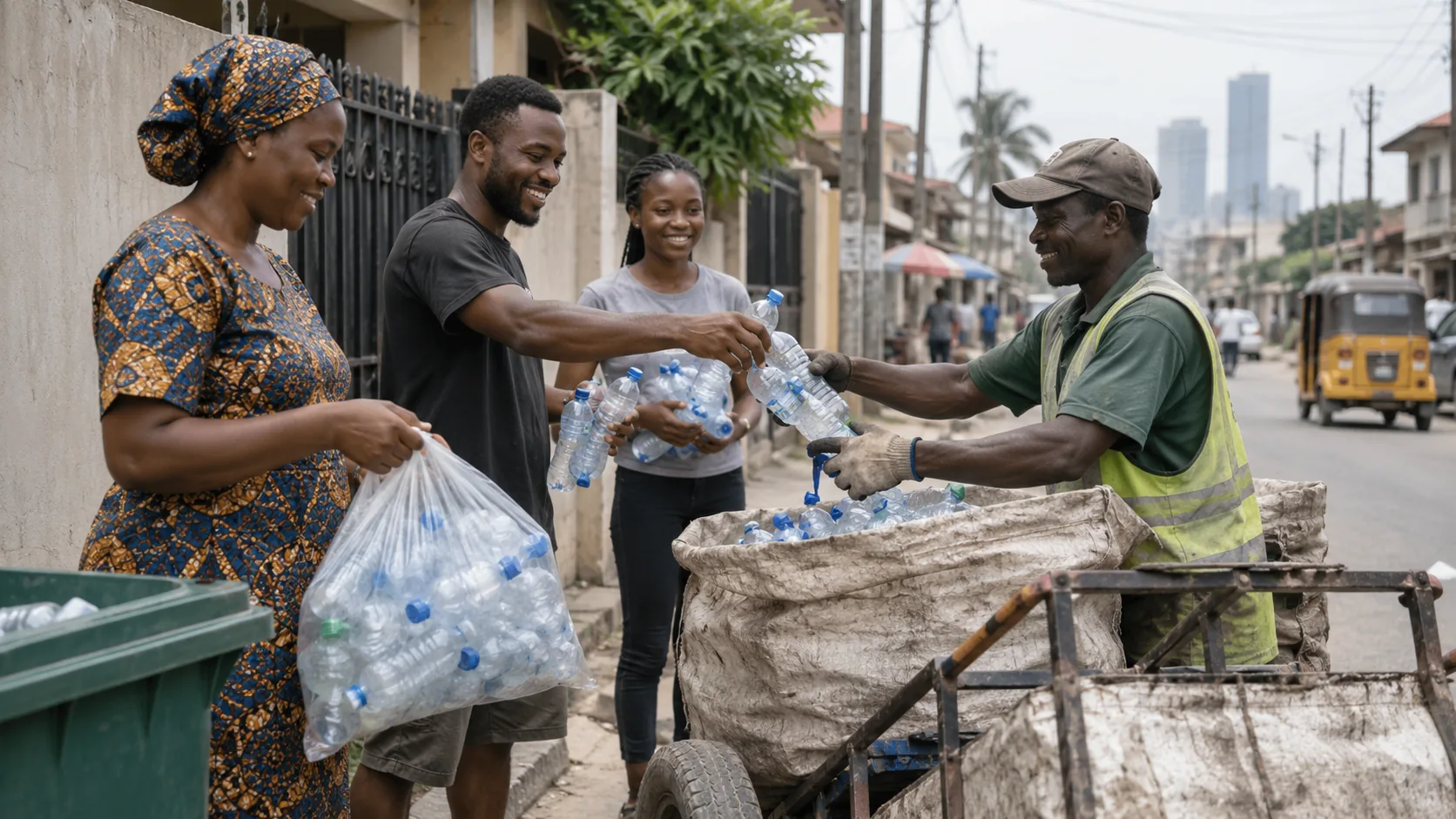
In Lagos, Bilikiss Adebiyi-Abiola helped build Wecyclers around that everyday problem. The organisation collects recyclable materials from households and connects them to recycling. Residents can receive rewards for what they separate. Wecyclers identifies Bilikiss as its founder; its account of the project describes collection using small vehicles able to move through neighbourhood streets.
Picture the simple choice this changes. A person finishes a drink. The bottle could become litter or join other bottles set aside at home. When collection is easy and a household sees a reason to participate, the second choice gets easier. The worker who comes to collect is a visible part of the solution, too. The system depends on that human link.
A Wecyclers account of a 2019 award said almost 20,000 households were participating at the time. That is a historical figure from the organisation, not a current count. It still shows the scale a neighbourhood idea can reach when a service fits into people’s routines.
There is also an honest limit to this example. Recycling alone cannot solve a city’s waste problem. Good collection, safe working conditions, reliable processing and less unnecessary packaging all matter. But Wecyclers offers a useful lesson: if residents are expected to change a habit, someone must make the better choice possible.
2. In Cotonou, cleaner streets take a team
In Cotonou, a drain full of waste is more than an unpleasant sight. During rain, water needs somewhere to go. Keeping streets and drains clear involves collection workers, residents, public agencies, traders and the people who maintain the system after a clean-up day has ended.
Benin’s Société de Gestion des Déchets et de la Salubrité, or SGDS, runs waste services across the Grand Nokoué area and in Parakou. Its description of the waste-management programme lists a planned service for 611,519 households, representing a population estimated at more than 2.3 million. These are programme coverage figures on the agency’s page; they should not be mistaken for an independently checked count of households currently receiving perfect service.
What happens on the ground is easier to understand through one event. The agency reported that in January 2024 its staff visited hundreds of households and shops in Cotonou neighbourhoods including Saint Jean, Sikècodji and Sainte-Cécile. Residents had raised concerns about dirty open drains. SGDS says it sent staff to inspect and clean them, then talked with people nearby about keeping waste out of the water channels.
That is what makes the example interesting. A truck can remove waste today. It cannot by itself explain to a shopkeeper why a drain will block again next week. A conversation cannot replace a collection service either. Both are needed, along with dependable public maintenance.
The people doing this work are easy to overlook. A collector starts early. A trader keeps waste for pickup. A neighbour reports a blocked channel. A municipal team responds. Each person sees only part of the system, but the street works better when those parts connect.
It would be misleading to turn one clean-up campaign into a claim that Cotonou’s waste challenge is solved. It is not. The more useful question is whether collection and communication continue after the cameras leave. Cities become easier to live in through regular service, not just a single impressive day.
3. In Nairobi, residents draw the map
Imagine a plan for your neighbourhood made by someone who has never walked its paths. They may know where the main road is. They may miss the shortcut children use to reach school, the place that floods first, the shared toilet that closes at night, or the tap that serves several families.
In Nairobi, community groups in the Muungano wa Wanavijiji federation have worked to gather the knowledge that residents already hold. They map settlements, count structures and record the services people use. The process can be as basic as neighbours drawing a map together before putting the information into a digital tool.
In Mukuru, residents and partners used this kind of evidence to argue that the area needed special attention. Slum Dwellers International reports that a 2016 community structure count recorded 100,561 units across the settlements. Units include homes, businesses and other structures; the number is not a count of people. In 2017, the county declared Mukuru a Special Planning Area, creating a path for a more detailed plan with community participation.
This did not mean every home suddenly gained safe water or every street became easy to cross. Planning is slow, and residents still have to push for promises to become working services. But the change in who gets heard matters. When a resident can point to a map and say, “This is where the water collects,” the problem is harder to ignore.
For a young person, the method is surprisingly simple. Start with a sheet of paper. Ask neighbours which places are safe, which are difficult and which are important. Mark what you find. Check it with the people who live there. A map is useful only when the people on it recognise their own lives.
4. In Dakar, a better trip gives time back
Transport shapes the rest of a day. A long commute can make a job harder to keep, a class harder to attend and family time harder to protect. When a public service runs well, the benefit is not only movement. It is time returned to people.
Dakar’s electric bus rapid transit line offers one example. A World Bank report published in 2026 says 65 percent of residents in the Greater Dakar Area can reach the city centre within a 60-minute commute. The report also describes about 300,000 daily commuters as an expected figure for the bus project by its June 2026 closing date, along with improved access to an estimated 170,000 jobs. Those are expectations stated in the report, not a verified count of daily riders today.
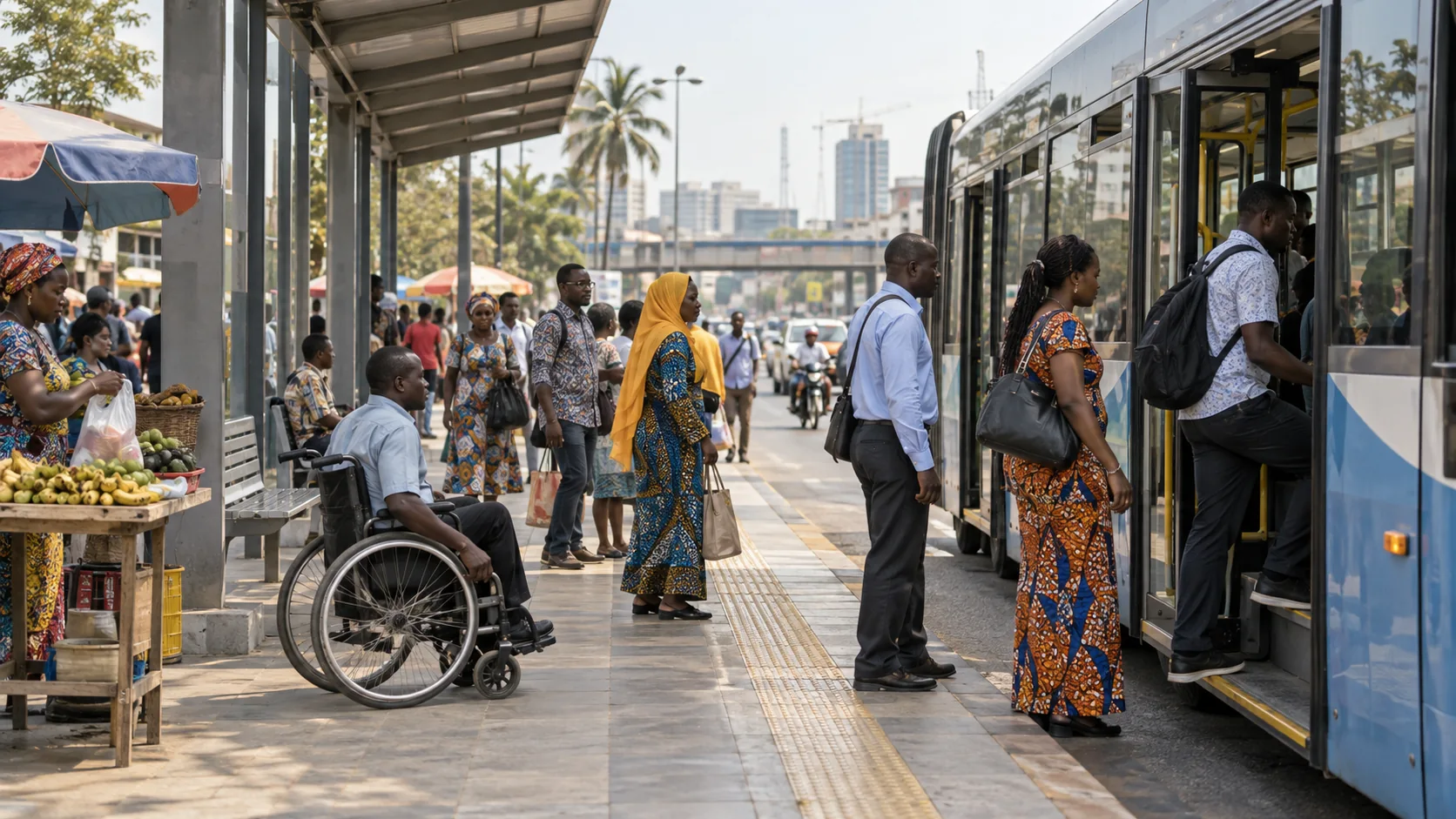
Who makes a bus corridor useful? The answer includes the engineers who planned it and the people who drive, maintain, clean, schedule and use it. It includes staff who help a first-time passenger find the right stop. It also includes planners who pay attention to what happens before and after the bus ride: can someone reach the station safely on foot? Is the fare manageable? Does the route serve the places people actually need?
A shorter, more reliable trip could mean more time to study, rest or arrive at work without rushing. But access varies from one neighbourhood to another, and a city’s success has to be measured in many journeys, including those that remain difficult. The number for Dakar gives a citywide picture; it cannot tell us how any one passenger experiences the route.
What these cities have in common
Lagos, Cotonou, Nairobi and Dakar face different problems. A recycling collector, a waste-service worker, a resident who makes a map and a bus driver have different jobs. They share one important skill: they look at the city from the point of view of someone trying to use it.
A grand plan can sound exciting. The test comes at street level. Can a parent get to work on time? Can a child cross safely? Can an older person find a clean public space? Can a household dispose of waste without making the next street worse? Can a resident describe a problem and expect someone to listen?
The work also needs lasting support. People can organise a clean-up, but they cannot replace an entire waste service with unpaid effort. Residents can make a map, but a public agency must act on what it shows. A bus can be fast on its own lane, but the walking route to the stop still matters. Asking individuals to do everything is unfair; ignoring what individuals know is a missed chance.
How can someone help where they live?
Start by choosing one everyday problem you can describe clearly. “Our city is dirty” is hard to act on. “The bin by this market fills before collection day, and litter reaches the nearby drain” gives people something to investigate. Name a place, a time and who is affected.
Then listen before suggesting a fix. Ask the people who use the street at different hours: a vendor, a child going to school, a person with limited mobility, the collection worker, the neighbour beside the drain. They may each see a different cause. Their answers can save a group from solving the wrong problem.
Next, find out who is responsible for the service. Is it the municipality, a waste company, a transport operator, a school or a building owner? A small group can document what is happening, keep dates and photos where appropriate, and make a specific request. It can also offer help that is realistic: share collection times, test a safer route, or explain a change to neighbours.
Finally, check whether anything improved. Count what you can count, but also ask how people feel using the place. One cleaner street tomorrow is good. A street that stays cleaner for months, with a reliable collection plan behind it, is better.
These are modest steps. That is their strength. They allow people to begin without pretending that every city problem has a quick fix.
A city is a daily promise
A city makes a promise each morning: that millions of people can leave home and find ways to learn, work, meet others and return safely. The promise is never kept by buildings alone. It is kept, or broken, in the details of daily life.
Bilikiss Adebiyi-Abiola saw that recycling had to reach homes. Residents in Mukuru made their own needs visible on a map. Workers and neighbours in Cotonou dealt with waste where it blocked real streets. People running Dakar’s transport system make a shorter journey possible for many passengers. None of these stories is a perfect ending. Each shows a way to begin, improve and keep asking whom the city serves.
The next person making an African city easier to live in may be someone you pass every morning. Ask what they do. Ask what they need. Then notice how much of the city depends on them.