What Practical Learning Looks Like: Glim Education and the Power of Play
A child puts a card on the table. The question is about an African country, a famous person, a place or a tradition. Someone guesses. Someone disagrees. A parent asks what the answer means. For a few minutes, learning feels less like being tested and more like being invited into a conversation.
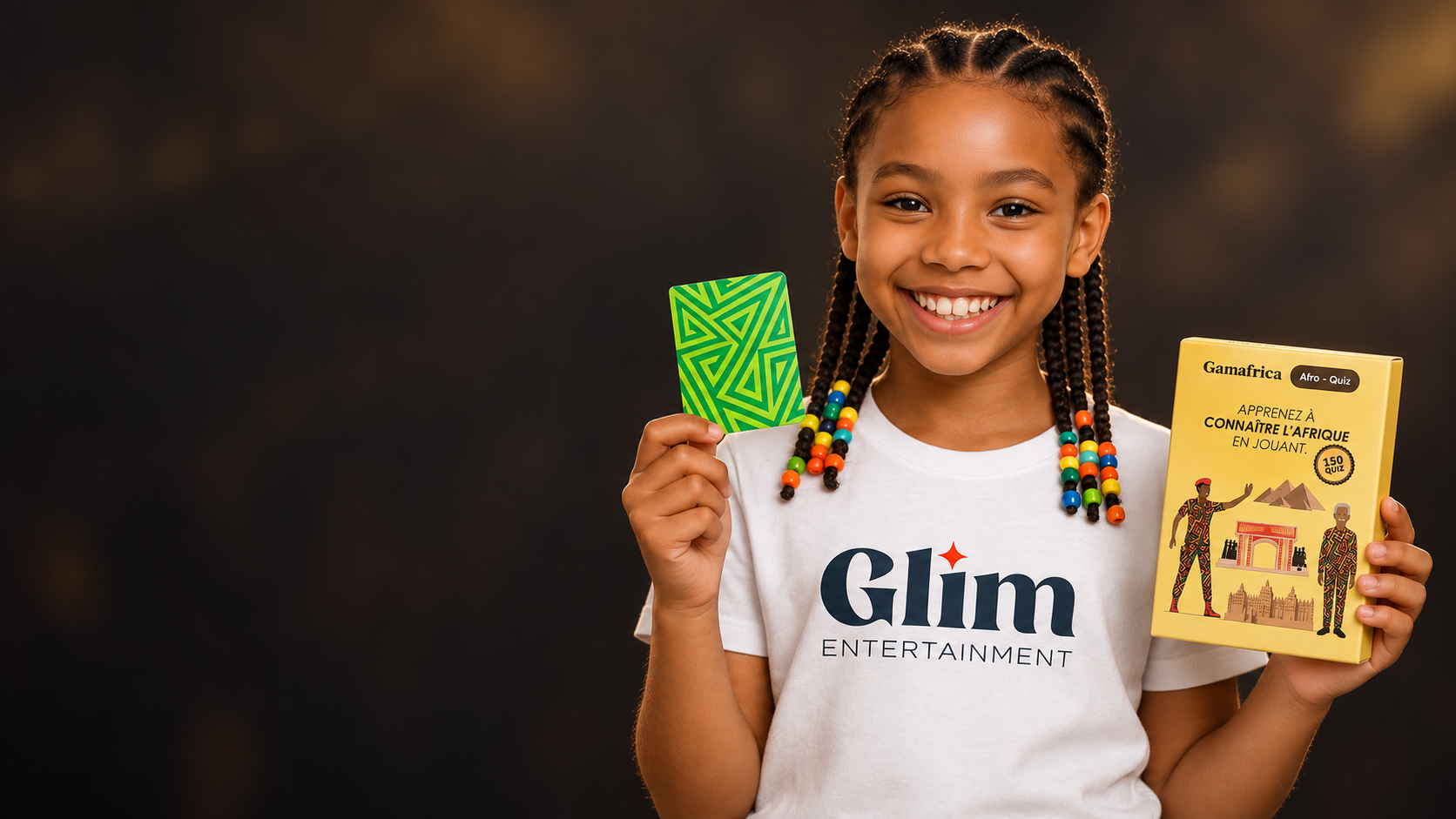
That is the space Glim Education wants to make. Based in Benin, the project creates physical learning products with African stories at their centre. Its first two products are different in form: Gamafrica Afrique is a quiz card game, while Koluma Bénin is a colouring book. They share a simple idea: children can learn by doing something with their hands and talking about what they discover.
There is no need to claim that one game will transform a school system. A set of cards cannot take the place of good teachers, books or enough time in class. But a well-made activity can give a child a reason to ask one more question. That is a good place to begin.
The problem behind the products
Many children can name places far away before they can describe the history or geography of the place they live. This is not a fault in the child. It reflects the material they see, the stories adults choose to tell and the questions they are asked. A classroom can contain excellent lessons and still leave little room for a child to explore the world around them.
Glim's approach begins with familiarity. Its website says its first creations draw on Benin and Africa because these audiences matter to the project. That choice is practical. When a child recognises a city, a monument, a name or a familiar kind of scene, the topic has a place to land. The child may ask an adult what they know. Another child may have a different answer. The learning becomes a shared activity rather than a list of facts to recite.
Familiar material does not mean narrow material. A game about Africa can open questions about languages, maps, art, migration and the links between countries. A colouring page about Benin can start with a shape and end with a conversation about why a place matters. Neither conversation needs to sound like a formal lesson.
Gamafrica Afrique: questions that keep the table talking
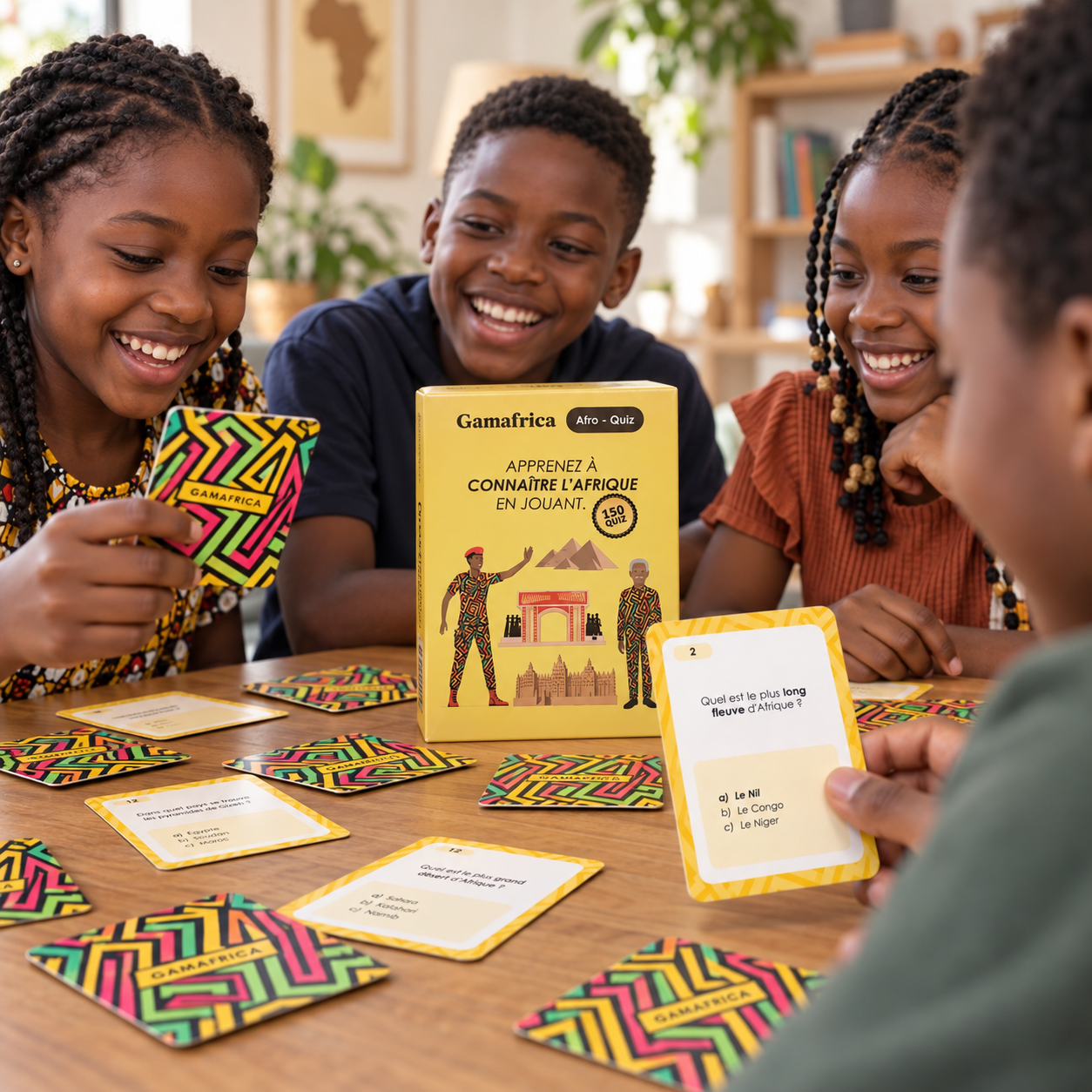
Glim describes Gamafrica Afrique as a card game with 150 questions, designed for two to eight players and recommended from age eight. The subjects on the site include geography, history, arts, people and traditions. It is meant to work at home, with friends or in a classroom. These are product details supplied by Glim, not independent learning-outcome measurements.
Imagine eight children gathered around a table. One reads a question aloud. A few hands go up; a few players do not know the answer. That is fine. The interesting moment may come after the answer. “Where is that country?” “Why is this person known?” “Have you seen a picture of that place?” A card can start a conversation that reaches beyond what is printed on it.
A teacher might divide a class into small teams and ask each team to explain how it found an answer. A parent might pause the game to look at a map with a child. Friends might disagree, check the answer and remember it next time. The box alone does not make those things happen; the people playing do. A good learning tool gives them a reason to try.
Games also lower the pressure of getting something wrong. If a child misses one card, another comes next. They get another chance to listen, guess and improve. That repeated practice can be especially useful for a child who is nervous about answering in front of a full classroom. The adult's tone still matters: curiosity works better when a wrong answer is treated as a chance to learn.
Koluma Bénin: an image becomes a question
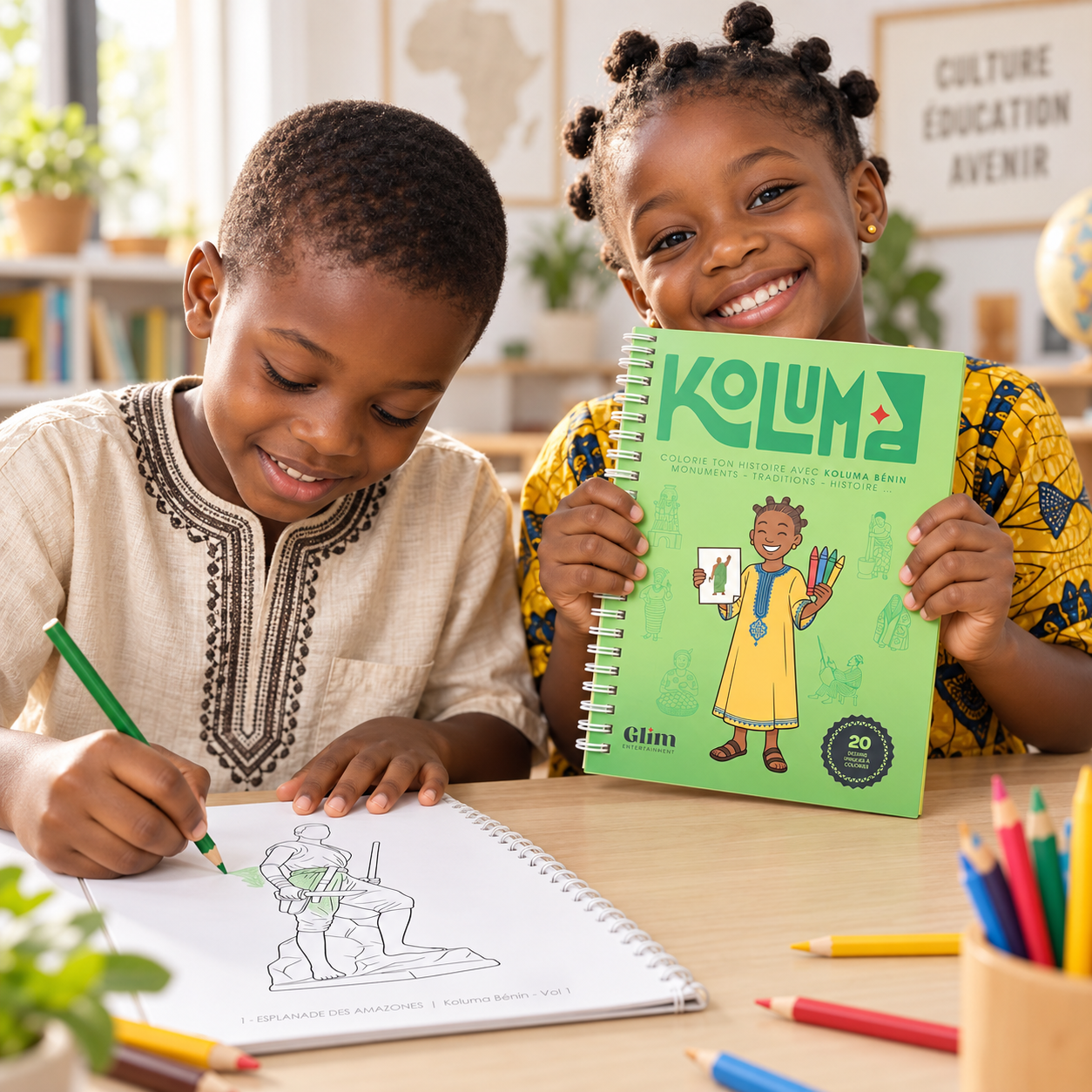
The second product works at a different pace. Koluma Bénin is an A4 colouring book with 20 illustrations inspired by Benin. A child can sit with one drawing, choose colours and notice details. The website presents it as a creative activity that can make children curious about their country's places and traditions.
Colouring does not teach history on its own. A child can finish a page without learning what it shows. The opportunity begins when someone asks, “What do you think this is?” or, “Have you ever been there?” Then the child can describe what they see before an adult adds a name or story. The drawing becomes an entry point, not a substitute for explanation.
That distinction matters. It is easy for adults to say a product is educational because it includes a landmark. The stronger test is what happens when a child uses it. Do they notice more? Ask questions? Want to learn more when the page is finished? A thoughtful adult can build on that interest with a photograph, a short story, a visit, a local speaker or a book from the library.
Koluma also creates a quiet kind of participation. A child chooses how to colour a page and can talk about the choice. They are not waiting only for the “correct” answer. That room to decide can make an activity feel like theirs. It can give a parent a way to sit beside the child without turning every moment into an examination.
Why play can support serious learning
Play is sometimes treated as a break from education. For a child, play can be one way of exploring the world. The UNICEF South Africa partnership on learning through play describes play as part of children's thinking, physical movement, relationships and emotional growth. That general evidence supports giving children more chances to explore; it does not prove that Gamafrica or Koluma produces a measured result. Glim has not published such an evaluation on its website.
Think about what a child actually does in a quiz game. They listen to a question, search their memory, offer an answer, hear another view and respond. In a colouring activity, they look closely, choose, coordinate their hands and perhaps tell a story about the image. These are ordinary actions, but they bring attention and language into the activity.
The role of the adult is to keep the task open enough for the child to think. “Good job, but what made you choose that?” can lead to more learning than “Wrong, the answer is on the back.” A game is useful when it makes people notice their own thinking. It becomes less useful when winning is the only thing that counts.
A day at home with a card game
The goal is not to finish all 150 questions in a week. Returning to a card later may be more valuable. A child remembers one story, then hears another version and adds to it. A younger child who cannot answer yet can help hold a map, spot a picture or ask the question. The recommended age of eight is a guide for the quiz itself, not a rule against including younger family members in the conversation.
There is a balance to keep. An adult should be ready to correct an error on a card if one is found, and to say “I don't know” when necessary. The lesson should not be that printed cards are always right. The lesson is that questions are worth exploring carefully.
A day in class with a small group
An educator using Koluma might display a real photograph next to an illustration, then ask children what details match and which are different. The group could write a short caption, draw a second scene or speak to an elder about a local place. That is an example of a possible classroom activity, not a claim about Glim's official curriculum.
Good teaching needs flexibility. Some classrooms have limited materials, large groups or very little time. A simple card game can be shared, but an adult must still adapt it. Making a product available is one step; helping teachers decide how to use it is another. A practical activity should fit a real timetable and a real room.
What makes a local story powerful
A child in Cotonou should be able to recognise pieces of their world in a learning activity. That does not mean every story must be about Cotonou. It means local people, places and history deserve the same care given to subjects from elsewhere. Familiarity can be the doorway through which broader curiosity enters.
There is also a responsibility here. Benin and Africa are not single stories. If one box or one book presents only the most famous monuments and names, many experiences will still be missing. A project that grows can keep asking families and teachers what they want children to learn, whose stories are underrepresented and how to check difficult facts. This is a suggestion for continued work, not a criticism based on a review of every Glim card.
Screens, books and the freedom to choose
Glim's first products are physical. That matters for a family that wants an activity away from a phone, but “screen-free” does not mean screens are bad. A child can use a book, a card, a video and a conversation for different reasons. The question is whether a tool helps them think, make something or connect with another person.
Families may also want to know what is inside before buying. Glim's website shows product galleries and explains the format of both products. Visiting those pages gives adults a clearer picture than assuming every child enjoys the same activity. The useful question is, “Will this help my child explore something they care about?”
What should parents and teachers look for?
Start with the child's response. Does the game make them curious after the round ends? Do they ask about a place they coloured? Can they explain something in their own words a few days later? These clues are more helpful than counting how quickly they finished a book or how often they won.
Then look at the adult's role. A good question can turn a card into a discovery. A rushed answer can close the conversation. Try asking, “What made you think that?” “Where could we check?” and “What else would you like to know?” These questions give a child permission to think aloud.
Finally, look for accuracy and variety. Check names and places with reliable material. Include more than one perspective when a topic is complicated. Let a child challenge a question and bring a new story to the table. The best learning tools make room for more learning beyond themselves.
The promise, in ordinary terms
Glim Education has made two products with different uses: one invites people to answer and discuss; the other invites a child to observe, colour and ask. Gamafrica Afrique and Koluma Bénin show how African stories can live in an activity someone can hold, share and return to.
That is a modest, meaningful contribution. The result depends on what families and teachers do with the opening. One card can lead to a map. One drawing can lead to a story. One question can lead a child to discover that their own country and continent are worth studying closely.
For Glim, the challenge ahead is to keep listening to children, checking the content and making the products useful in ordinary homes and classrooms. For adults, the task is simpler: sit down, make time and let a child ask the next question.